One drawer, and everything that wants it
The Bellemain bench works for beautiful hands, and that is how we judge a tool: it has to earn a place in the hand before it earns a place in the drawer. A kitchen gives you one good drawer, maybe two, and everything else competes for the rest. We start from that constraint. If a tool does not feel right when you pick it up, it will not get picked up often. That is the first test. The second is what happens when it goes back into the drawer.
Plenty of tools work fine on the first try and then disappear because they do not fit anywhere. We try to be honest about what does not belong. A fragile piece that does one job and then drifts to the back is not for a small kitchen. A tool you have to wrestle out from under a colander is not earning its slot. We would rather leave a space empty than fill it with something that fights the drawer.

So the drawer is where we begin. We think about the space between the handles, the height of a lid, and how a set stacks when the drawer closes. That sounds simple, and it is. It is also why we keep our tools fairly plain, with shapes you can grab without looking. The sections after this one get into specifics. This part is just the rule: if it feels right in the hand and fits without forcing it, it can stay.
Sets that nest, and sets that only stack
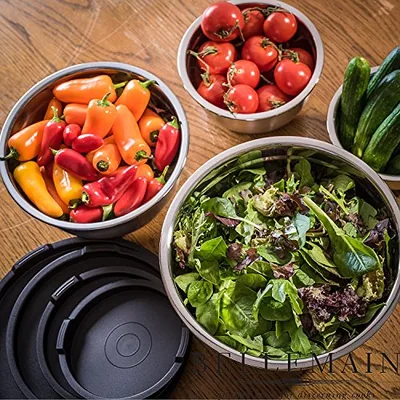
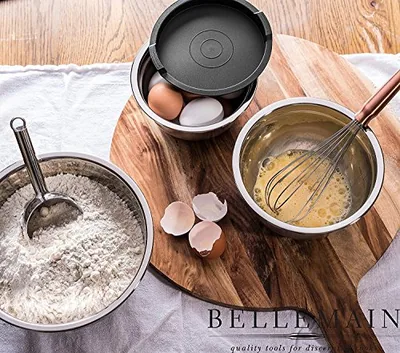
We think about the drawer long before we think about the counter. Tall things belong on a shelf. Wide, flat things that can disappear into one another belong in the drawer. Our mixing bowls do that. The set of three, four, or five nests into a single stack, and the airtight lids snap on and stack alongside. You pull the bowl you need. The rest stay out of the way.
Colanders sit in the same drawer, but they do not nest into the bowls. The three-quart tucks inside the five-quart, and that is the whole arrangement. If your drawer is shallow, the five-quart colander may not clear the lip. Measure before you commit. It does a straightforward job, and it does not fold.
| Line | Sizes we make | Pieces | From |
|---|---|---|---|
| Colanders | 3 and 5 quart | 4 | $38.99 |
| Mixing bowl sets | Sets of 3, 4, 5 | 3 | $23.99 |
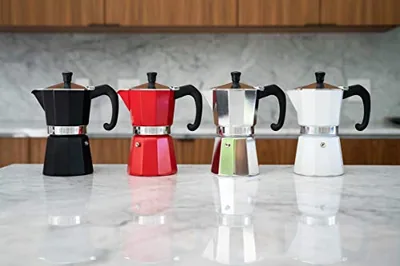
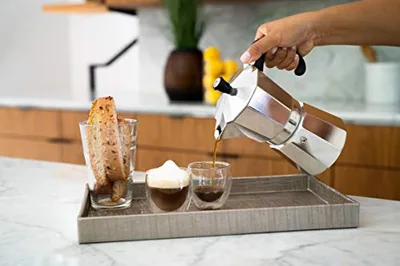
| Moka pots | 3, 6, 9 cups | 5 | $17.99 |
| Steak knife sets | Sets of 4, 6, 8 | 3 | $27.99 |
| Drying mats | 16 × 18 in and 17 × 24 in | 10 | $9.89 |
| Flour sifters | 3 and 5 cup | 2 | $17.09 |
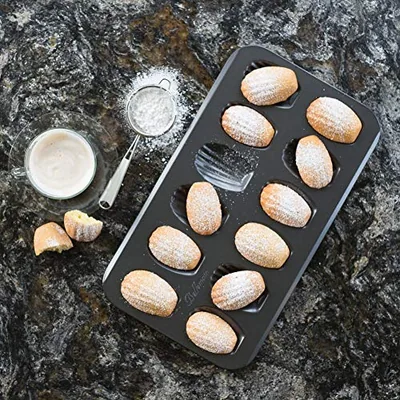
A nesting set saves space. A stacking set saves time. Our measuring cups nest, but we made the handles grip so a wet hand can pull the right cup without unthreading the whole tower. Stacking donut and madeleine pans sit flat on top of each other. They take the same footprint as a single pan. You trade a little height for a lot of reach. That trade is the real logic of the drawer.
Bamboo trays and knife blocks
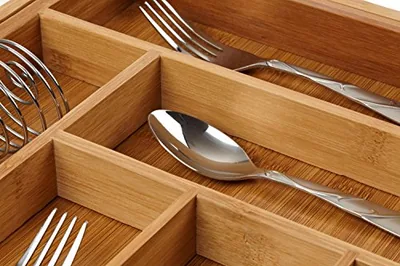
We make 2 bamboo pieces, and every one of them lives in the drawer. That is not an accident. Bamboo is the material we come back to for anything that houses a tool: it is stable through humidity, it does not warp, it is gentle on blades, and it weighs half what an oak tray would weigh.
A bamboo tray is the skeleton of a good drawer. It divides the space into compartments you can rearrange as your tools change, so the garlic press ends up next to the peeler because that is how you cook, not because the drawer decided it.
| Piece | Material | Slots or count | Price |
|---|---|---|---|
| 100% Pure Bamboo Knife Drawer Organizer, Knife Block - 16 Slots | Bamboo | 16 slots | $28.99 |
| Spice Rack Organizer for Cabinet Door, Set of 12 Clips, White | not stated | Set of 12 | $11.99 |
| Bamboo Kitchen Drawer Organizer, Expandable 8-Slot Tray | Bamboo | 8 slots | $28.95 |
Our bamboo knife blocks earn their spot the same way. They sit flat inside the drawer, holding the blades separate and the handles up. The block trades the countertop for a quiet drawer, and the kitchen feels calmer for it. The slots are angled so you read the edge, not reach for it. The bamboo is finished smooth enough that it will not scratch the drawer bottom, and the block itself does not shift when you slide the drawer open and closed.
A tray and a block are not the exciting purchase. They are the ones that make the exciting purchases work. You open the drawer, you see what you need, and you close it. No rummaging, no rattling, no paused search. That is the kind of order a well-made bamboo organizer gives you, and it is the reason we keep these pieces in the catalog.

Knives in a drawer: the block, the board, the rule
A good knife earns its drawer space before almost anything else. You reach for one at every meal, which means it lives close to your hand. But a loose knife in a jumbled drawer is trouble: blades chip, edges roll, and a blind reach can end in a cut. The three common answers are a countertop block, a magnetic board on the wall, and a tray that slides into the drawer itself. We make two of those three.
Our serrated steak knife sets come in four, six, or eight, and we make a bamboo drawer tray with 16 slots to put them in. The tray is sold on its own, not as part of the set. A counter block is handsome, but not every counter has room for it.

Use one cutting board for fresh produce and a separate one for raw meat, poultry, and seafood.
U.S. Food and Drug Administration, Safe Food Handling. Read 23 August 2026. Source
The tray is the quieter choice. It lays each knife in its own slot, blades separated, handles easy to grab. The whole thing tucks into a standard drawer and leaves the worktop clear for flour, a cutting board, a moka pot. Bamboo makes sense here because it resists moisture and does not dull an edge the way a hard plastic tray can.
Then there is the rule. We will let the experts say it plainly.
Both wooden and plastic cutting boards can be sanitized with a solution of 1 tablespoon of unscented, liquid chlorine bleach per gallon of water.
USDA Food Safety and Inspection Service, Cutting Boards. Read 23 August 2026. Source
A drawer tray is not just a neat row of handles. It is the difference between a knife that stays sharp for years and one that goes dull against a spoon. If the drawer is the only real estate you have, the tray earns its place without a fight.
The cabinet door: spice clips and the jar opener
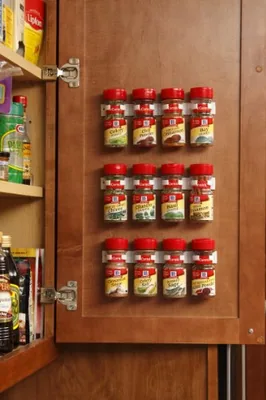
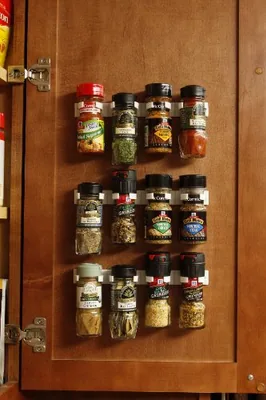
Spices need to be seen, not dug for. Our clips hold jars flush against the inside of a cabinet door, labels out. You glance and grab.
A jar opener under a cabinet is always there when you need it. No drawers, no hunting.
The door keeps those two problem-solvers off the counter and out of the drawer, leaving the drawer for tools that nest.
The counter: drying mats and the roll-up rack
Some kitchen tools belong on the counter, not in the drawer. A wet colander or a just-rinsed mixing bowl needs a place to drip, and tucking it away while damp invites trouble. Our microfiber drying mats earn their counter space because they soak up water fast and protect the surface underneath.
They are thin enough to slide between the toaster and the wall when not in use, and they come in 7 colors, so you can pick one that blends in or adds a little life to the sink corner. A mat is not a dish rack.
It is a landing pad for hand-washed items that need to air-dry, and it works best when you have just a few things to set down.
| Drying mat | Size | Color | Price |
|---|---|---|---|
| Dish Drying Mat, 17 × 24 in | 17 × 24 in | Ivory | $13.04 |
| Dish Drying Mat, 17 × 24 in | 17 × 24 in | Gray | $13.98 |
| Dish Drying Mat, 16 × 18 in | 16 × 18 in | Gray | $11.98 |
| Dish Drying Mat, 17 × 24 in | 17 × 24 in | Navy | $15.48 |
| Dish Drying Mat, 17 × 24 in | 17 × 24 in | Light Gray | $14.48 |
| Dish Drying Mat, 17 × 24 in | 17 × 24 in | Mocha | $15.48 |
| Dish Drying Mat, 17 × 24 in | 17 × 24 in | Green | $15.48 |
| Dish Drying Mat, 16 × 18 in | 16 × 18 in | Light Gray | $11.99 |
| Dish Drying Mat, 16 × 18 in | 16 × 18 in | Navy | $9.89 |
| Dish Drying Mat, 17 × 24 in | 17 × 24 in | Trellis | $14.48 |
When the pile grows, the roll-up rack takes over. It spans the sink, turning the basin into a drying zone without using any counter. Sturdy rods hold plates, cups, and pans, and the whole thing rolls up tight when the sink is empty. You do not commit permanent space to a bulky drainer. If you mostly use a dishwasher, the rack will stay rolled up most of the time, and that is fine. It is there for the days when every pot is dirty.
Both pieces live in our dish drying department, a small collection built around a simple idea: dry things where they get wet. That keeps the drawer free for nesting tools and dividing trays. Our name, Bellemain, means beautiful hands in French. It is a reminder that a tool has to feel right before it looks right. A drying mat or a roll-up rack is not the showpiece of a kitchen. It is the quiet helper that keeps the counter dry and the drawer uncluttered.
Hand tools that earn a slot: ricer, squeezer, slicer
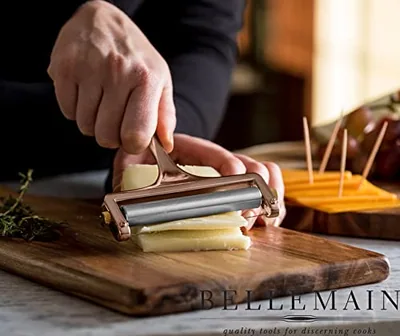
A hand tool earns a drawer slot by doing one thing and doing it every time you reach for it. Our potato ricer is not a press, not a mill. It pushes a cooked potato through a perforated plate and leaves the skin behind. Our metal citrus squeezer hinges on a pin and uses leverage, not your wrist strength. Our wire cheese slicer cuts a clean slice from a block of cheddar without dragging or crumbling. None of them chops, grates, or opens a can. That is the point.
We make 19 hand tools, and almost all of them are stainless steel. The grade is named on its page, usually 18/8 or 18/10. That matters because a drawer is a humid place, and a tool that pits after a month is a tool you throw away.
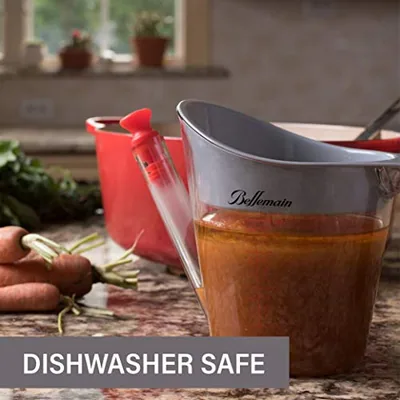
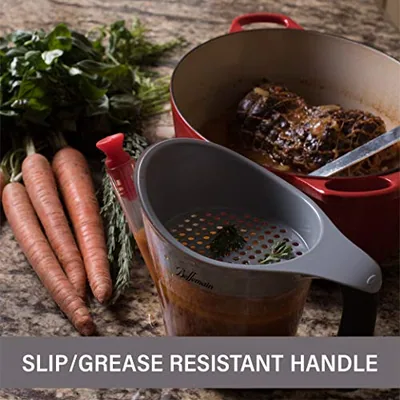
Most are dishwasher safe, so you can drop them in the rack without a second thought. The safe-cut can opener leaves a smooth edge on the lid and never touches the contents. The stainless funnels nest, and the fat separator pours from the bottom. Each one solves a specific problem and then gets out of your way.
If you rarely mash potatoes or squeeze a lemon, leave these out. A drawer cluttered with aspirational tools is not a drawer you enjoy opening. But if you make mashed potatoes every Sunday or grate Parmesan onto pasta twice a week, a ricer or a wire slicer will feel like the right tool in your hand.
The photograph in this section shows one of our pieces sitting in a real drawer, alongside a few other things that made the cut. It is not alone, but it is not crowded either. That is the balance we aim for.
Keeping the drawer clean
A drawer that holds kitchen tools picks up what those tools leave behind. Flour dust from a sifter, potato starch from a ricer, a drip of citrus from the squeezer that looked dry but was not. We see it in our own testing. A damp tool tucked away in a dark drawer is an invitation to smells you cannot scrub out later.
The easiest fix is the one that takes five seconds: wipe it down with a dry cloth before it goes back. Our microfiber drying mats work well for that, and they hang on the oven handle right where you need one.
To prevent food poisoning, follow the four steps to food safety: Clean, Separate, Cook, and Chill.
Centers for Disease Control and Prevention, Preventing Food Poisoning. Read 23 August 2026. Source
The materials we choose help here too. Stainless steel does not absorb odors, and its surface gives crud nowhere to grip. A bamboo organizer tray can be pulled out, wiped, and left to air dry in minutes. Many of our tools can go straight into the dishwasher, so the distance from a messy prep counter to a clean drawer shrinks to a single cycle. That is the kind of thing that keeps a drawer from becoming a chore.
You do not need a system for this. A cut sheet of paper towel or a thin mat on the floor of the drawer catches any grit and gets replaced now and then. The real habit is small: nothing goes back until it is dry, and no spill gets ignored because the drawer was already closed. Most weeks, that is all it takes.
Measuring the drawer before you buy
We make tools to fit the hand, but the drawer gets the final vote. Before you buy, measure the inside of the drawer at its narrowest point, not the opening. Cabinet faces and slide hardware can steal half an inch from each side. A tape measure pulled across the lip gives you a number the tool will never see. We list width and height for 42 of our 66 pieces, and we take those numbers inside the box, at the points where a handle or a lid will actually pass.
Height matters more than most people expect. A drawer with low clearance will hold flat tools and shallow trays, but a colander with its handles up or a moka pot on its side can catch on the frame. If you keep a dish towel under the tools, add a quarter inch. If the drawer has dividers, measure each slot, not the whole drawer. That will spare you from buying a set that nests well but only fits in one direction.
Some pieces are not suited to certain drawers, and we would rather tell you before you buy. A deep colander will not slide under a low overhang above the drawer. A knife block belongs in a deeper drawer, not a shallow one. If your kitchen has narrow drawers, skip pieces that need the full width and use the cabinet door instead.
For most people, the safe choice is to measure the drawer empty, then measure it again with the mat or liner you actually keep there. That second number is what the piece has to live with.
Measuring cups, and what nests inside what
A tool that lives in a drawer comes back carrying whatever was on the counter. Flour dust from a sifter, a drop of citrus oil from a squeezer, the faint grease a can opener picks up along the rim. We design each piece so that return trip does not become a mess you have to scrub out later.
Stainless steel wipes clean with a single pass of a cloth. The ricer plates release with a twist and rinse under a tap. No crevice collects old potato starch. No hinge traps water.
That matters because a drawer is a closed space. Spills dry into dust, and dust invites more dust. Every few weeks we pull the tray out, tip it over the sink, and wipe the bottom with a damp cloth. It takes a minute. The bamboo dividers lift straight out. The knife block lifts out. There is nothing glued down, nothing that needs a tool to remove. We keep the drawer simple so cleaning it stays simple.
A dry drawer is a clean drawer. We let a washed colander drain in the rack before it goes back. We dry the inside of a nesting bowl with a towel. None of our pieces needs oiling or seasoning. They go away dry, and the drawer stays dry. That is the whole routine. No special cleaner, no schedule pinned to the fridge. Just a habit that forms after the first time you open the drawer and everything inside it is ready.

A drawer plan in six steps
Start by taking everything out. A drawer is a small space, and it's easy to forget how much has crept in. Empty it, wipe it down, and measure it. Width and depth matter, but height matters most for stacking. This is when you get honest about what you actually use. The colander you reach for every week stays. The gadget you haven't touched since last Thanksgiving can live somewhere else.
Once the drawer is clean and dry, sort what you pulled out into three piles: daily, weekly, and rarely. Daily tools get the front and center. Weekly items can sit behind them or in a second tier. Rarely used things should not be in this drawer at all.
Nest what nests. Our mixing bowls, measuring cups, and colanders are made to stack inside each other, so they take up one footprint instead of three. For knives and other odd shapes, a bamboo divider tray keeps them from sliding around and makes the most of the depth.
Finally, consider what can move to a cabinet door. Spice clips and an under-cabinet jar opener free up a surprising amount of room. The goal is a drawer you can open without having to shift one thing to reach another. It won't look like a catalog photo, and it doesn't need to.
A good drawer is just one where your hand lands on the right tool without thinking. We build our tools to help you get there: they nest, they divide, and they feel right in your hand. The rest is simply knowing what you cook and keeping only that.
Sources we read for this piece
- USDA Food Safety and Inspection Service, Cutting Boards, www.fsis.usda.gov/food-safety/safe-food-handling-and-preparation/food-safety-basics/cutting-boards. Read 23 August 2026.
- Centers for Disease Control and Prevention, Preventing Food Poisoning, www.cdc.gov/food-safety/prevention/index.html. Read 23 August 2026.
- U.S. Food and Drug Administration, Safe Food Handling, www.fda.gov/food/buy-store-serve-safe-food/safe-food-handling. Read 23 August 2026.